
Choosing the right commercial property is an important decision for any business. Beyond the office layout, rental price and location, businesses must also consider the surrounding environment, accessibility, infrastructure and long-term suitability. One property format that has gained attention in the commercial real estate sector is mixed-use development.
Mixed-use developments bring different property types together within a single project or integrated neighbourhood. These may include commercial offices, retail outlets, restaurants, residential apartments, entertainment facilities and other lifestyle amenities.
For businesses looking for a strategic location, leasing in a mixed-use development can offer several advantages. It can improve accessibility, provide access to shared amenities and create opportunities for business networking. However, it may also come with certain challenges related to rental costs, foot traffic, privacy and operational requirements.
Understanding the pros and cons of leasing in a mixed-use development can help businesses make an informed commercial real estate decision.
What Is a Mixed-Use Development?
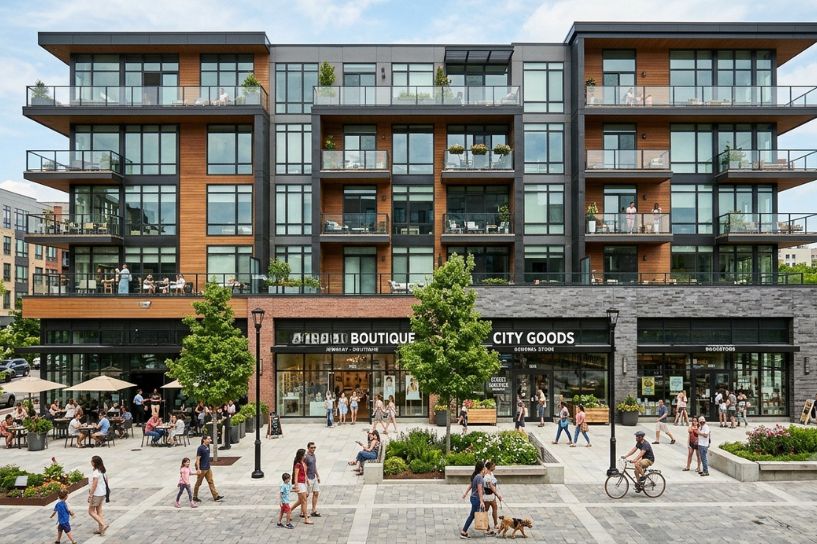
A mixed-use development is a real estate project that combines two or more property uses within the same building, complex or planned development. Instead of having separate areas for residential, commercial and retail activities, these developments integrate different functions into one location.
For example, a mixed-use property may have office spaces on the upper floors, retail outlets and restaurants on the ground floor, and residential apartments in another section.
Some developments also include hotels, fitness centres, entertainment spaces, parking facilities and landscaped recreational areas.
The objective is to create a connected environment where people can work, live, shop and access everyday services without travelling long distances.
For businesses, leasing commercial office space in such developments can provide access to a well-connected business environment with multiple supporting facilities.
Pros of Leasing in a Mixed-Use Development
Before selecting a commercial property, businesses should understand the potential benefits of operating from a mixed-use development.
1. Strategic Location and Better Accessibility
One of the biggest advantages of mixed-use developments is their location. Many are planned around established business districts, transport networks and high-demand urban areas.
Employees, clients, vendors and business partners may benefit from easier access to offices through nearby roads, public transport, parking facilities and surrounding infrastructure.
Having retail outlets, restaurants and essential services within the development can also make everyday activities more convenient.
For businesses that regularly interact with clients or have employees commuting from different locations, accessibility can play an important role in improving the overall workplace experience.
2. Access to Shared Amenities and Facilities
Mixed-use developments often provide access to shared facilities that support everyday business operations.
Depending on the project, these may include:
- Restaurants, cafes and food outlets
- Fitness centres and recreational spaces
- Parking facilities
- Landscaped areas and common spaces
- Security and building management
- Elevators and common access areas
- Retail and convenience stores
These facilities can improve convenience for employees and visitors. Businesses may also benefit from professionally managed common areas without having to independently arrange every supporting facility.
However, tenants should always confirm which amenities are included in their lease and which require additional payment.
3. Greater Business Visibility
Businesses operating in mixed-use developments may benefit from the activity generated by nearby retail outlets, residential communities and commercial establishments.
For example, a company located within a recognised commercial development may find it easier for clients and visitors to identify its location.
Retail businesses can benefit directly from surrounding foot traffic, while professional service firms may benefit from being situated in an active and established commercial environment.
Although visibility depends on the business type and property location, a well-positioned unit can contribute to stronger brand presence.
4. Opportunities for Networking and Business Connections
A mixed-use development can bring together businesses from different industries, professionals, service providers and customers.
This creates opportunities for networking, collaborations and potential business relationships.
For example, a consulting firm may operate near technology companies, financial service providers or retail businesses. Such proximity can make professional interactions and business networking more convenient.
For startups and growing companies, being part of an active commercial ecosystem may provide opportunities to connect with other businesses.
5. Convenient Work Environment for Employees
Employee convenience is an important factor when choosing an office location.
Mixed-use developments can offer a more integrated work environment by providing access to food outlets, shopping facilities, fitness centres and other everyday services.
Employees may find it easier to manage lunch breaks, daily errands and after-work activities without travelling to different locations.
This convenience can contribute to a better workplace experience and may support employee satisfaction and retention.
6. Potential for Long-Term Location Value
Established mixed-use developments may benefit from surrounding infrastructure improvements, growing commercial activity and increased demand for well-connected locations.
For businesses leasing commercial property, choosing a development with strong connectivity and professionally maintained infrastructure can support long-term operational requirements.
However, future value and demand are not guaranteed. Businesses should evaluate the development’s location, occupancy levels, management quality and surrounding market before signing a lease.

Cons of Leasing in a Mixed-Use Development
While mixed-use developments offer several benefits, they may not be suitable for every business. It is equally important to evaluate the potential disadvantages.
1. Higher Rental and Maintenance Costs
Commercial spaces in premium mixed-use developments may come with higher rental rates because of their location, amenities and infrastructure.
In addition to the monthly rent, tenants may need to pay maintenance charges, parking fees, utility costs and other common area expenses.
These additional expenses can increase the overall occupancy cost.
Businesses should carefully review the complete rental structure before making a decision. Comparing the total cost of leasing with other commercial properties in the same location can help determine whether the investment is justified.
2. Increased Foot Traffic and Noise
Mixed-use developments attract different groups of people throughout the day, including residents, shoppers, office employees, visitors and delivery personnel.
While this activity can benefit certain businesses, it may create challenges for companies that require quiet and focused working environments.
Noise from retail outlets, restaurants, common areas and public spaces can affect workplace comfort.
Businesses involved in consulting, technology, financial services or other activities requiring confidentiality and concentration should evaluate the location and office layout carefully.
3. Limited Privacy and Security Considerations
Since mixed-use developments accommodate different types of occupants and visitors, managing access and privacy can become more complex.
Businesses handling confidential information, sensitive documents or valuable equipment may require additional security arrangements.
Before leasing, companies should understand the property’s security systems, visitor management procedures, CCTV coverage, restricted access areas and emergency response arrangements.
It is also important to confirm whether the building management provides adequate security for commercial tenants.
4. Shared Facilities May Have Restrictions
Although shared amenities are a major advantage, they may also come with certain limitations.
For example, parking spaces may be limited during peak hours, elevators may experience higher usage, and common facilities may have restricted operating hours.
Businesses that depend on frequent client visits, deliveries or extended working hours should check whether the available facilities meet their operational requirements.
It is important not to assume that every facility advertised by the developer will be freely accessible to all tenants.
5. Complex Property Management
Managing a mixed-use development involves coordinating the requirements of different occupants, including residents, office tenants, retailers and service providers.
This can sometimes create challenges related to maintenance schedules, parking allocation, noise management, security policies and common area usage.
The overall tenant experience depends heavily on the quality of property management.
Businesses should review the developer’s reputation, building maintenance standards, management policies and service response systems before finalising a lease.
6. Limited Customisation and Operational Flexibility
Some mixed-use developments have strict guidelines regarding office modifications, signage, operating hours, deliveries and the use of common facilities.
These restrictions may limit a tenant’s ability to customise the workspace according to its business requirements.
Companies planning specialised interiors, additional infrastructure, branding installations or extended operating hours should confirm the applicable permissions before signing the lease agreement.

Important Factors to Consider Before Leasing
Choosing a property should involve more than comparing rental prices. Businesses should evaluate how well the development supports their current and future requirements.
Here are some important considerations:
- Location and Connectivity: Evaluate road access, public transport connectivity, nearby business districts and convenience for employees and clients.
- Total Occupancy Cost: Consider rent, maintenance, parking, utilities, security charges and other additional expenses.
- Business Requirements: Check whether the office layout, available area, infrastructure and facilities are suitable for your business operations.
- Security and Privacy: Understand access control, visitor management, surveillance systems and emergency procedures.
- Property Management: Review maintenance quality, service standards and the management team’s ability to handle tenant concerns.
- Lease Terms and Conditions: Carefully review the lease tenure, security deposit, escalation clauses, lock-in period, renewal conditions and exit terms.
- Future Expansion: Consider whether additional space will be available if your team grows or business requirements change.
A detailed evaluation of these factors can help businesses avoid unexpected expenses and operational challenges.
Is Leasing in a Mixed-Use Development Right for Your Business?
Mixed-use developments can be suitable for businesses that value location, accessibility, supporting amenities and an active commercial environment.
Professional service firms, consulting companies, technology businesses, startups and organisations with regular client interactions may find these developments worth considering.
Retail outlets, cafes and customer-facing businesses may also benefit from the surrounding residential and commercial population.
However, businesses that require strict privacy, specialised infrastructure, controlled access or a quieter working environment should carefully evaluate the property before committing.
The right decision ultimately depends on the company’s budget, workforce requirements, business model and long-term growth plans.
Conclusion
Leasing in a mixed-use development offers a combination of convenience, accessibility, shared amenities and potential business networking opportunities. At the same time, factors such as higher occupancy costs, increased foot traffic, privacy concerns and property management restrictions should not be overlooked.
The key is to identify a commercial property that aligns with your business operations rather than choosing a location based only on its appearance or amenities.
With the right location strategy and a thorough understanding of lease conditions, businesses can select a workspace that supports productivity, operational efficiency and future growth.
At ONIR Commercial Real Estate, finding the right commercial property is about more than identifying available space. It is about understanding business requirements, evaluating locations and helping businesses make informed commercial leasing decisions.
Explore suitable commercial property opportunities with ONIR and take the next step towards finding the right space for your business.

Join The Discussion