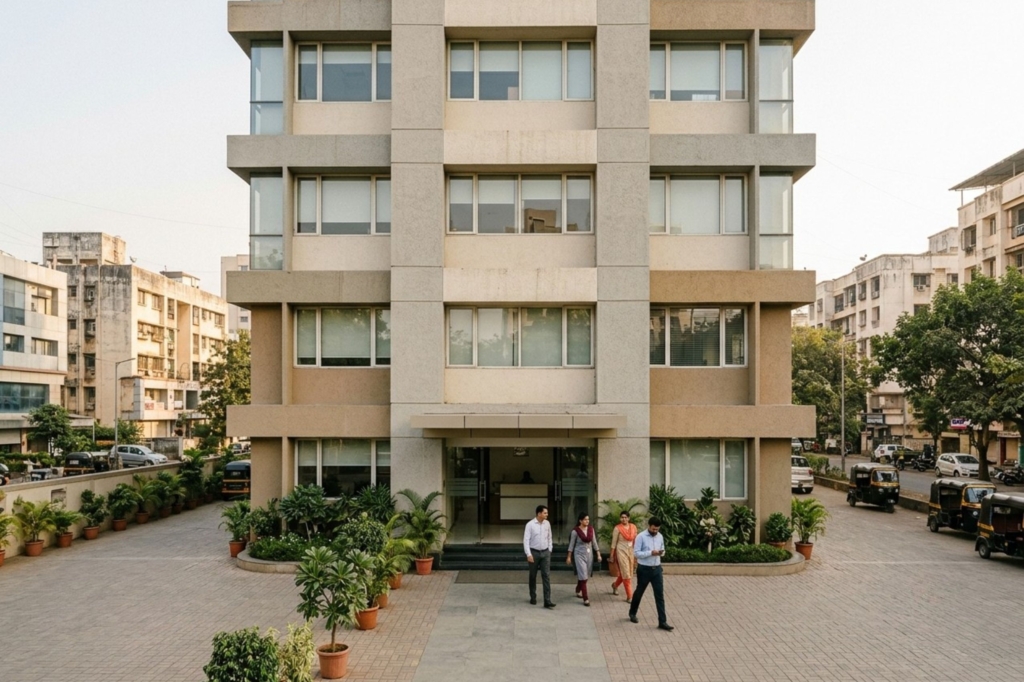
Advantages of Grade B Commercial Properties
1. Potentially Lower Occupancy Costs
One of the main reasons businesses consider Grade B properties is affordability. Depending on the market and building, rent and certain associated costs may be lower than those of comparable Grade A properties.
This can help businesses allocate more of their budgets towards recruitment, technology, marketing, and core operations.
2. Practical Office Solutions
Not every organisation requires a premium lobby, extensive amenities, or a prestigious business address. Companies that prioritise functional work areas and essential facilities may find Grade B properties sufficient for their needs.
3. Opportunities for Customisation
Some Grade B buildings may allow businesses to customise their interiors, subject to the owner’s approval, technical feasibility, and applicable regulations.
This can be useful for organisations that need specialised workstations, storage areas, operational departments, or a layout designed around their workflow.
4. Access to Established Business Locations
A Grade B property may offer a practical location close to transport links, suppliers, customers, or employees.
Businesses should evaluate the actual location and travel convenience rather than assuming that a higher property grade always means better accessibility.
Which Commercial Property Is More Cost-Effective?
The most cost-effective property is not necessarily the one with the lowest monthly rent. Businesses should compare the total cost of occupying and operating the space.
Consider these expenses before making a decision:
- Monthly rent and security deposit.
- Common area maintenance charges.
- Electricity, water, and backup power expenses.
- Internet and IT infrastructure.
- Interior fit-outs and furniture.
- Housekeeping, security, and maintenance.
- Parking charges and other applicable fees.
- Lease escalation, restoration, and exit-related costs.
For example, a lower-rent property may require significant spending on electrical upgrades, interiors, air conditioning, or additional security. A higher-rent property with suitable existing infrastructure may have a different overall cost profile.
Prepare a total occupancy cost comparison for both options, ideally over the expected lease period. This provides a more realistic basis for decision-making than comparing rent alone.
How to Choose Between Grade A and Grade B Commercial Properties
Before selecting a property, evaluate your business needs against the building’s features and costs.
1. Define Your Budget
Establish a realistic budget that includes rent, deposits, maintenance, utilities, fit-outs, and ongoing operating expenses.
If your business is working with a strict budget, a suitable Grade B property may offer better value. If infrastructure, amenities, and building standards are essential, a Grade A property may justify the additional expense.
2. Assess Your Business Requirements
Consider the nature of your operations. A client-facing corporate office may have different requirements from a back-office team, technology support centre, or administrative operation.
List the essential requirements, including seating capacity, cabins, meeting rooms, storage, power backup, connectivity, and visitor facilities.
3. Evaluate the Location
Location affects employee commuting, client accessibility, business connectivity, and future expansion.
In Navi Mumbai, for example, businesses may explore commercial locations such as Vashi, Nerul, Juinagar, Seawoods, Mahape, Airoli, and Belapur, depending on their workforce, customers, and operational needs.
Compare travel times, public transport access, parking, nearby amenities, and the availability of suitable commercial spaces.
4. Inspect the Building Infrastructure
Do not rely solely on marketing descriptions. Visit the property and check the condition of common areas, lifts, electrical systems, washrooms, air conditioning, fire safety arrangements, and backup power.
Also, ask about maintenance responsibilities, service response times, and any planned building repairs.
5. Consider Future Growth
Estimate your expected workforce and space requirements over the next three to five years.
A property that meets today’s requirements but cannot support future expansion may create relocation costs later. Confirm whether additional space is available within the building or nearby.
6. Review the Lease Terms
Before signing, review the rent escalation clause, lock-in period, notice period, security deposit, maintenance obligations, fit-out permissions, renewal conditions, and exit provisions.
Seek professional legal advice where necessary and verify the property’s ownership and relevant approvals.
Are Grade A Properties Always Better Than Grade B Properties?
No. The right choice depends on your business priorities.
A Grade A property may be the better option when your organisation requires premium infrastructure, a corporate environment, modern amenities, and a building that aligns with its brand positioning.
A Grade B property may be the better option when affordability, functional space, location convenience, and practical operations are the main priorities.
A well-maintained Grade B property in the right location can deliver greater value than a more expensive Grade A property that does not suit your requirements.
The objective is to identify a commercial property that balances quality, cost, accessibility, and operational suitability.
Why Consider Commercial Property in Navi Mumbai?
Navi Mumbai has several established and developing commercial areas that businesses can evaluate when planning an office move or expansion.
Different locations offer different advantages depending on connectivity, surrounding businesses, available inventory, and employee commuting patterns.
When exploring commercial real estate in Navi Mumbai, consider:
- Vashi: An established commercial location with railway connectivity and access to business services.
- Nerul and Seawoods: Options to evaluate for businesses seeking connectivity and access to surrounding residential and commercial areas.
- Juinagar: A location worth considering for businesses assessing railway access and nearby commercial developments.
- Mahape and Airoli: Areas to explore for businesses with technology, corporate, and operational requirements.
- Belapur: A commercial district to consider for organisations evaluating office accessibility and business infrastructure.
The suitability of each location depends on the specific building, rental budget, available space, and business needs. Compare individual properties before making a decision.
Looking for the right commercial property for your business?
Explore commercial real estate opportunities with ONIR and evaluate office spaces based on your location preferences, space requirements, and business objectives.
Visit ONIR to learn more and connect with the team regarding your commercial real estate requirements.
Frequently Asked Questions (FAQs)
1. What is the difference between Grade A and Grade B commercial properties?
Grade A properties generally offer premium construction, modern infrastructure, and a wider range of amenities. Grade B properties typically provide functional commercial spaces with standard facilities and may offer more budget-conscious options.
2. Is Grade A commercial property more expensive?
Grade A properties often command higher rents because of their building specifications, location, infrastructure, and amenities. However, rental prices vary by city, building, available space, and market conditions.
3. Is Grade B commercial property a good choice for small businesses?
Yes. A well-maintained Grade B property can suit small and medium-sized businesses that prioritise affordability, practical layouts, and convenient locations. Businesses should inspect the building and verify its facilities before leasing.
4. Can a Grade B property be suitable for a corporate office?
Yes. A Grade B property may be suitable for a corporate office if it meets the company’s requirements for infrastructure, security, connectivity, accessibility, and employee facilities.
5. What should I check before leasing a commercial property?
Review the property’s location, usable area, building condition, safety arrangements, utilities, maintenance charges, lease terms, security deposit, rent escalation, and fit-out permissions. Verify ownership and applicable approvals before signing.
6. Which locations should businesses consider for commercial property in Navi Mumbai?
Businesses may evaluate Vashi, Nerul, Seawoods, Juinagar, Mahape, Airoli, and Belapur based on connectivity, budget, workforce location, and operational needs. The best location depends on the individual business and property.